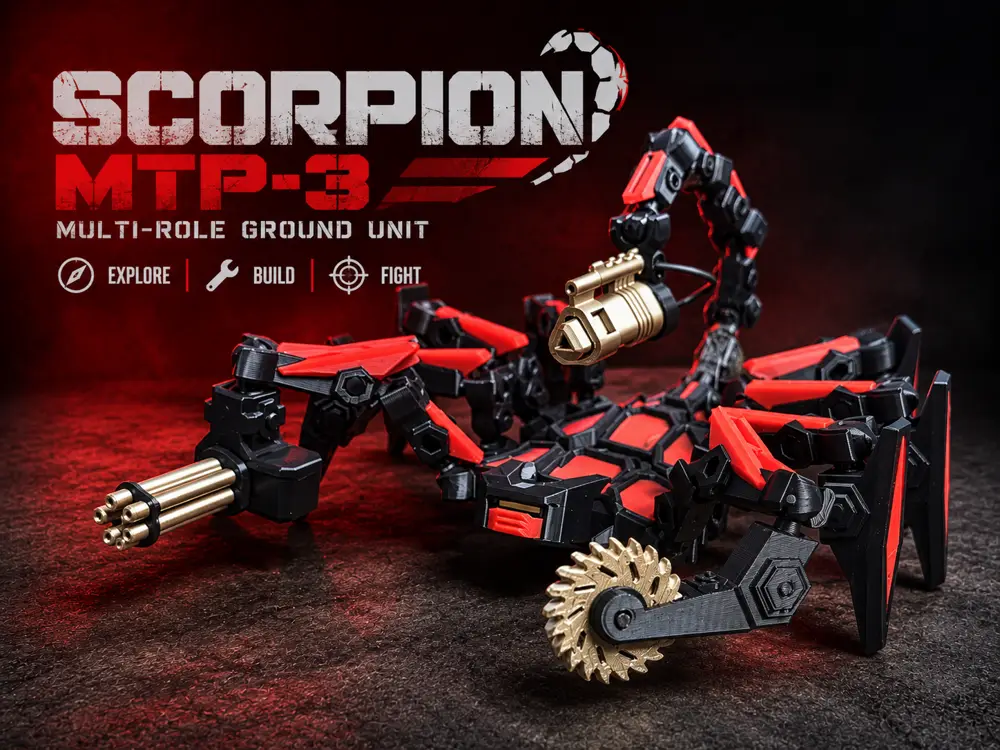
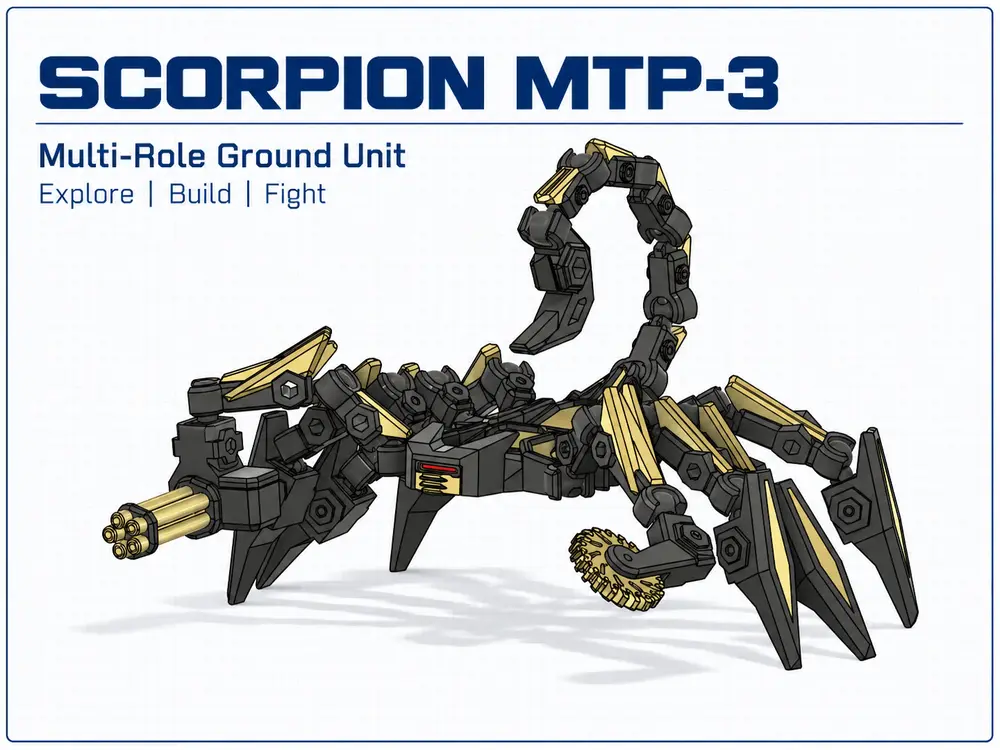
Scorpion MTP-3


Tanks have dominated ground warfare for more than a century. They are proven, powerful, and extremely effective machines.
But proven technology is not necessarily future technology.
With the rapid development of artificial intelligence, robotics, autonomous systems,
and remote operation, I believe the next generation of military ground vehicles could look very different from the machines we know today.
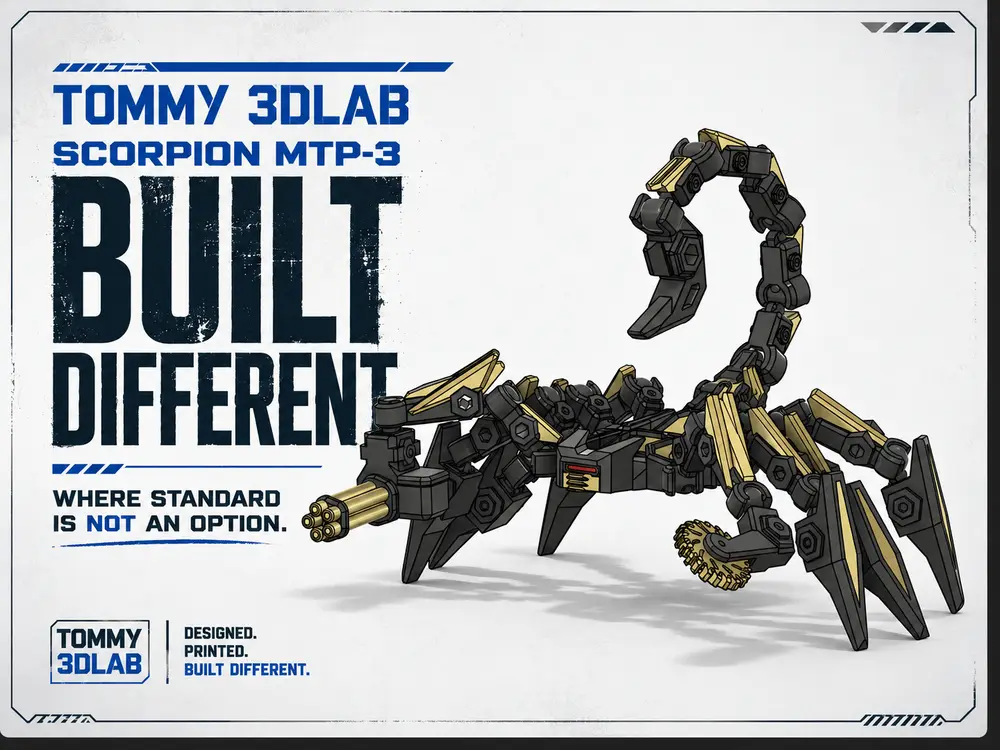
The Scorpion MTP-3 is my interpretation of such a future.
It is designed as an unmanned modular ground platform, with a strong focus on extreme terrain mobility, versatility, and operation in environments where conventional tracked vehicles increasingly reach their limits.
The MTP-3 can theoretically operate in two different modes.
It can either be remotely controlled by a human operator from a safe distance, or operate semi-autonomously through an AI-assisted system that receives mission objectives and commands from a central control station.
When multiple MTP-3 units are deployed together, they can also be linked through a coordinated swarm network. This allows individual units to exchange information and react as part of a connected formation.
Assembly
No glue or additional supplies are required. With a well-calibrated printer and dry filament, all parts should print cleanly.
I recommend printing the model in at least PETG, as ball-joint connections wear out faster in PLA.
For mounting the circular saw to the arm, you only need a short piece of filament directly from the spool. Insert it as a pin, then carefully heat and deform both ends slightly so it cannot slide back out.
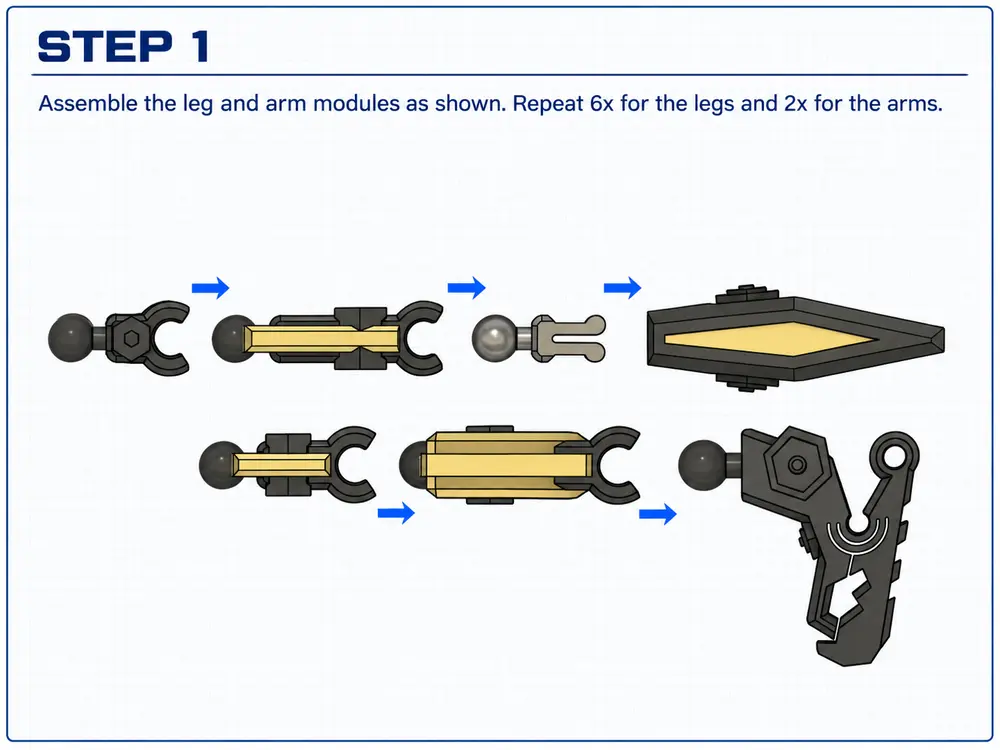
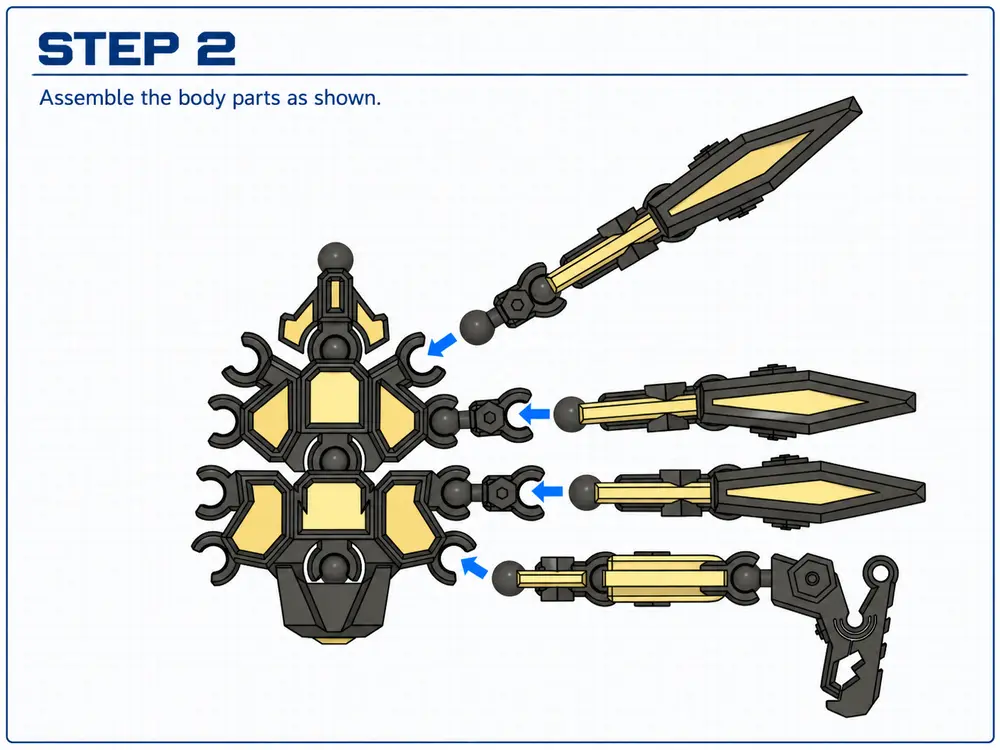
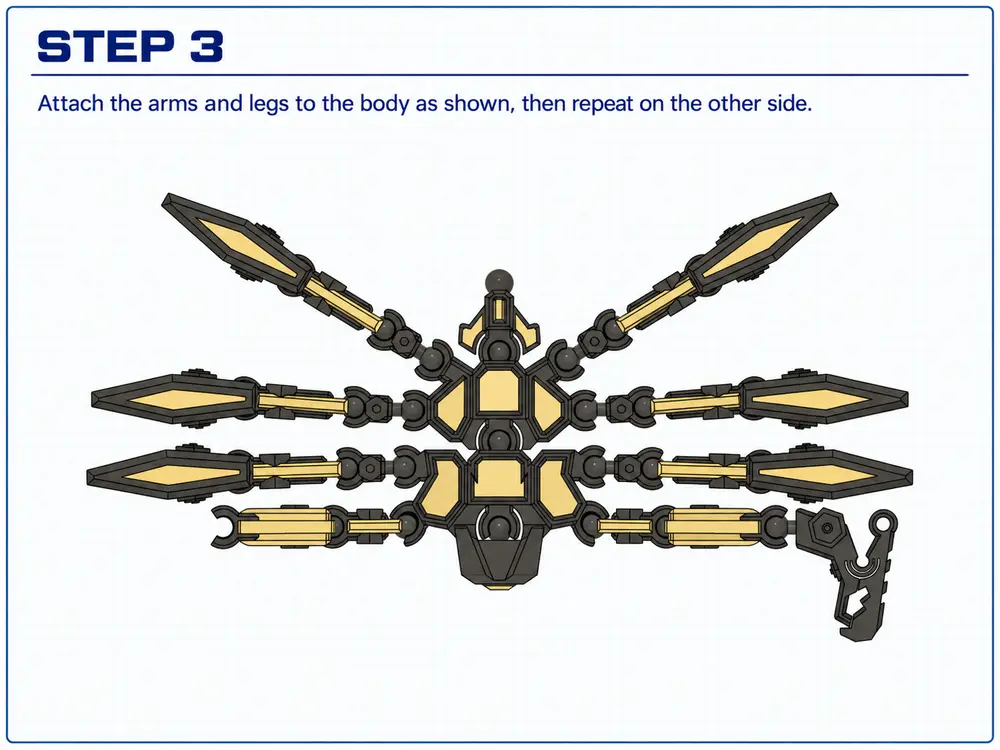
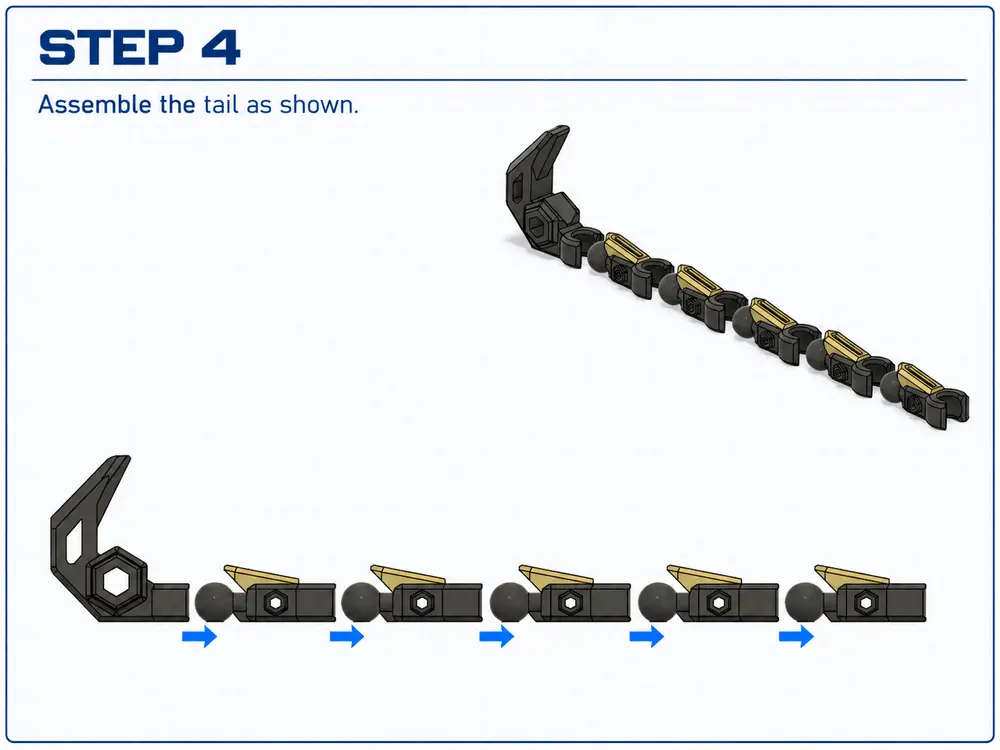
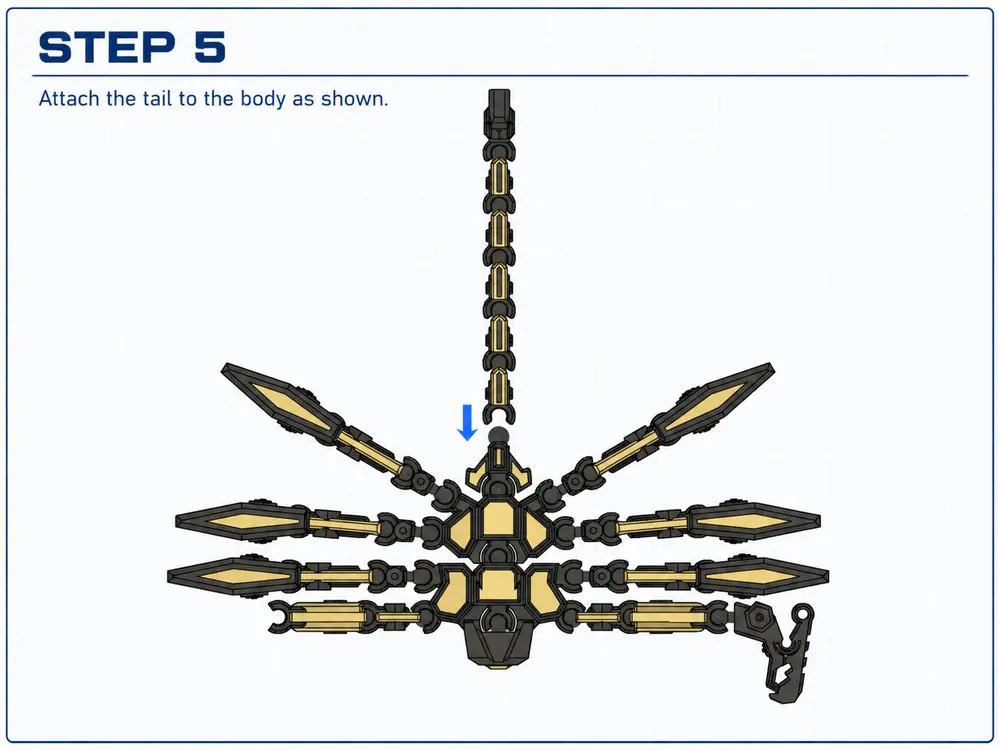
! Assembly Video Guide coming soon !
You are prohibited from sharing, sub-licensing, selling, renting, hosting, transferring, or distributing the digital file or 3D printed versions of this object, as well as any other derivative work in either digital or physical form (including remixes).You are not allowed to use the objects in any manner that involves charging money or collecting fees without permission.